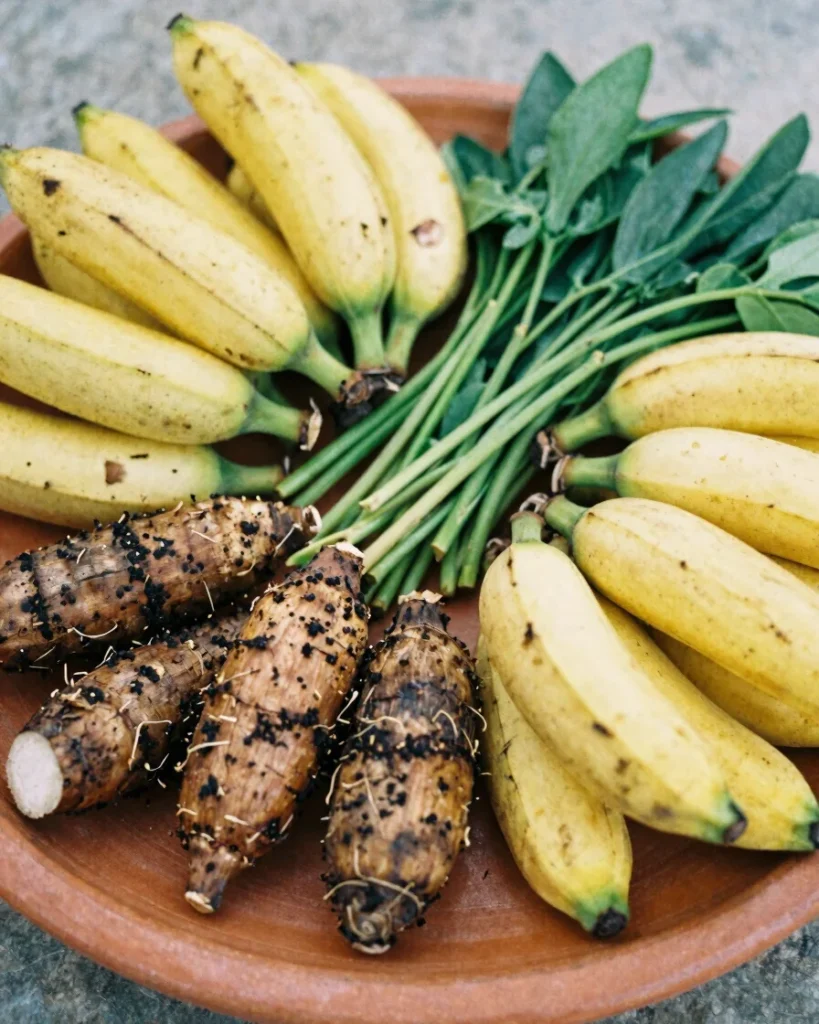
Hispaniola is shared by the Dominican Republic and Haiti, two sovereign nations with intertwined histories. Their kitchens draw on the same native root crops and tropical produce, shaped by Indigenous, European, and African influences in distinct ways.
Mountains, river valleys, and coastal plains give each side of the island its own growing conditions. Farmers grow many of the same crops, but the way they are harvested, dried, and prepared differs from one region to the next.
Understanding this geography helps explain why two neighboring kitchens can cook from the same ingredients and still arrive at very different dishes.
Shared ingredients
Staples that cross the border
Root crop
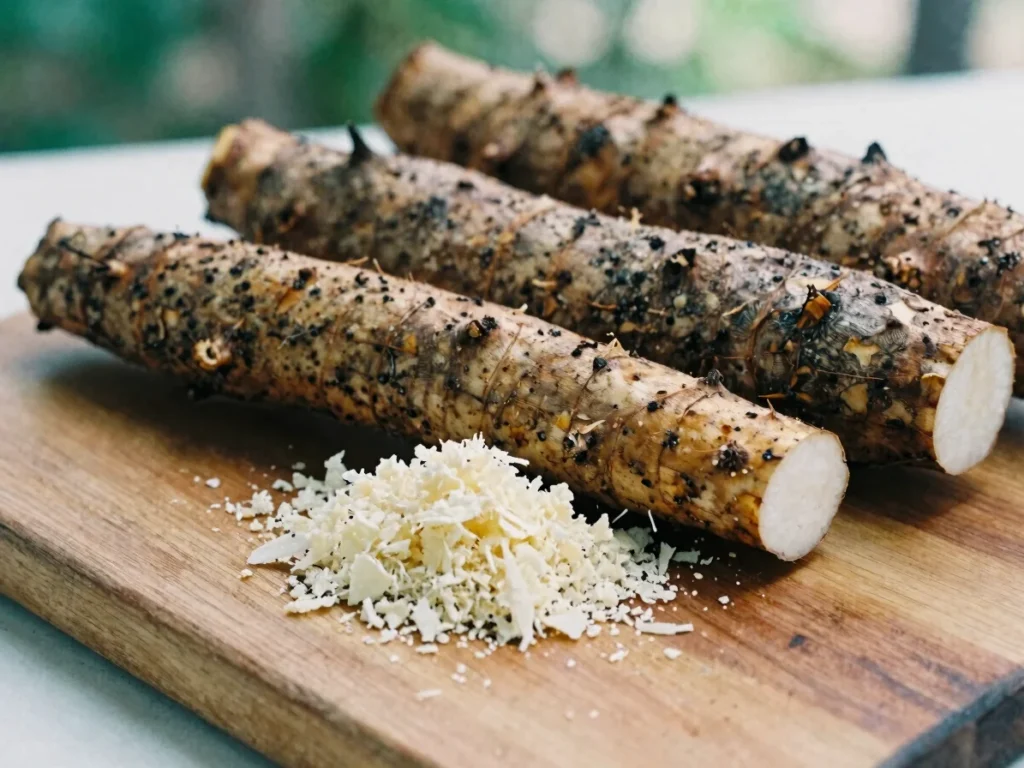
Cassava
A native root that appears across both sides of the island, grated, pressed, and baked into flatbreads and staples that have sustained generations.
Fruit
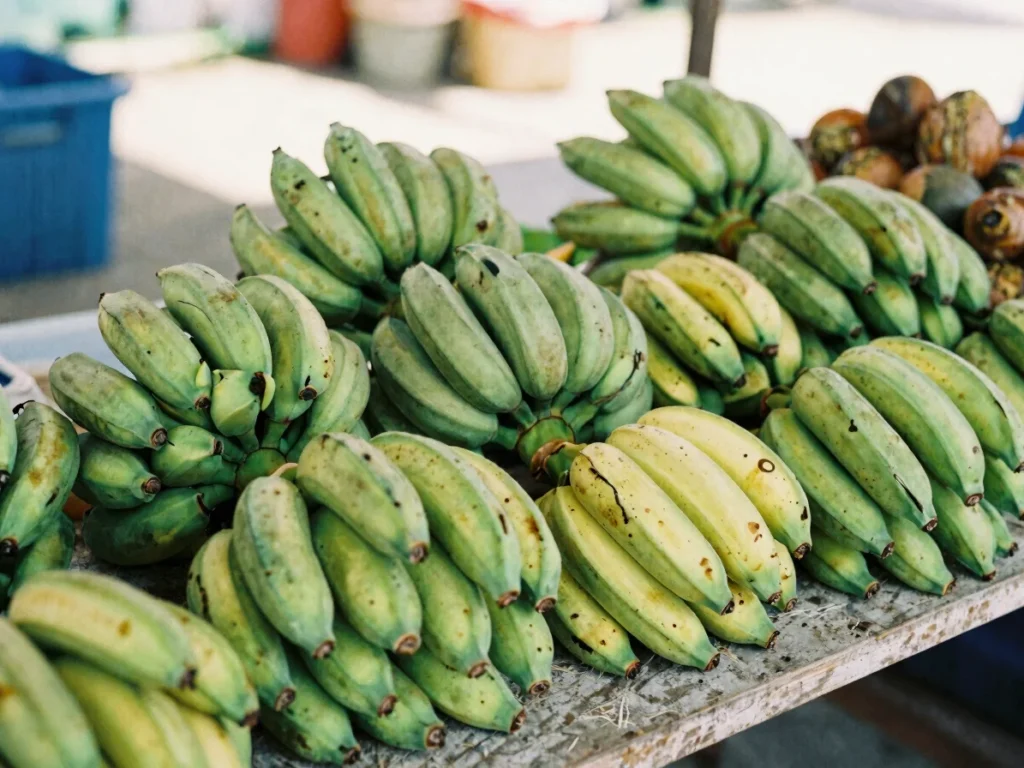
Plantains
Cooked green, ripe, or fried, plantains move between everyday meals and celebrations, adapting to each household's method and seasoning.
Flavor base
Sofrito and djon djon
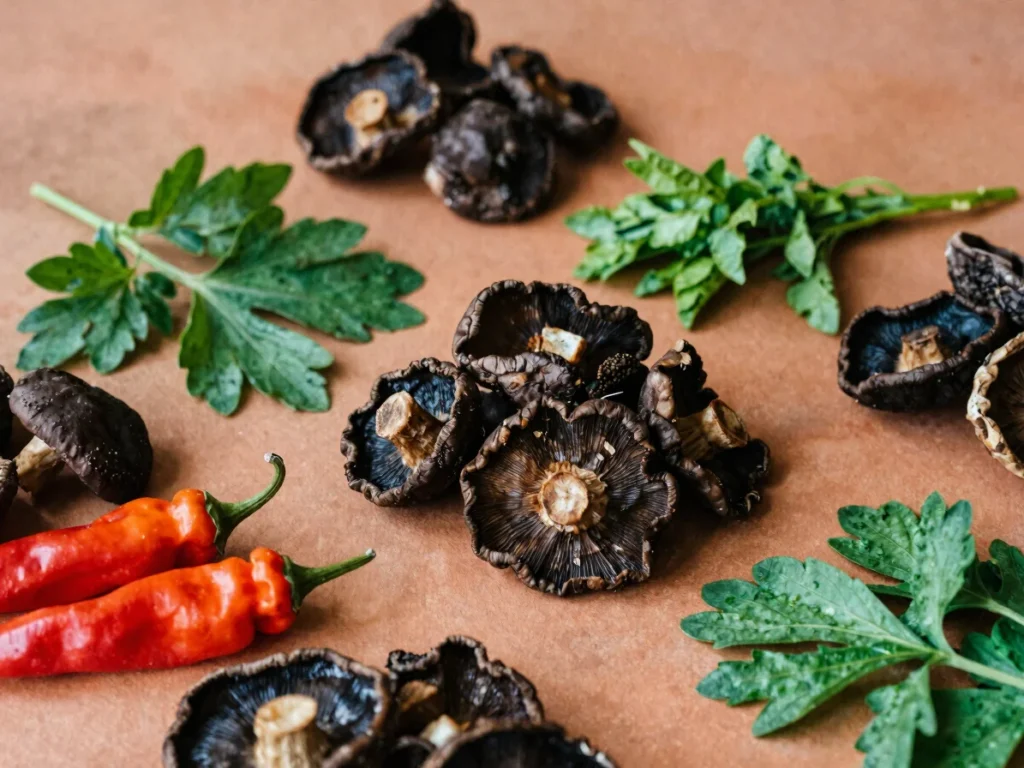
Aromatic bases of onion, peppers, and herbs anchor many dishes, while djon djon, a dark wild mushroom grown on the island, adds a distinctive Haitian note.